In the private collection of the Salar Jung Museum in Hyderabad, there is a strand of natural Gulf pearls acquired in 1891 for a sum equivalent to several years of a skilled artisan's income. Each pearl was individually selected over three months by a merchant agent who had spent two decades in Bahrain learning what to look for. The strand has not been formally valued since 1978. The pearls have not been worn since 1965. They remain, in their box, entirely themselves.
This is the first thing to understand about a pearl: it does not deteriorate. A diamond's value is an abstraction enforced by commercial convention. A pearl's value is intrinsic — it is the same object it was when it was formed, when it was found, when it was first worn. Time does not diminish it. In favourable conditions, time improves it. The nacre deepens. The lustre becomes more complex.
The second thing to understand is where it comes from. A pearl is not a mineral. It is not extracted from the ground. It is secreted by a living creature — a bivalve mollusc — in response to an intrusion it cannot remove. Layer by layer, over months and years, it surrounds the irritant with aragonite crystals bound in a protein matrix. The resulting structure is what we call nacre. Nacre is the reason a pearl has lustre. It is also the reason that a pearl, held to the light at the right angle, seems to glow from within.
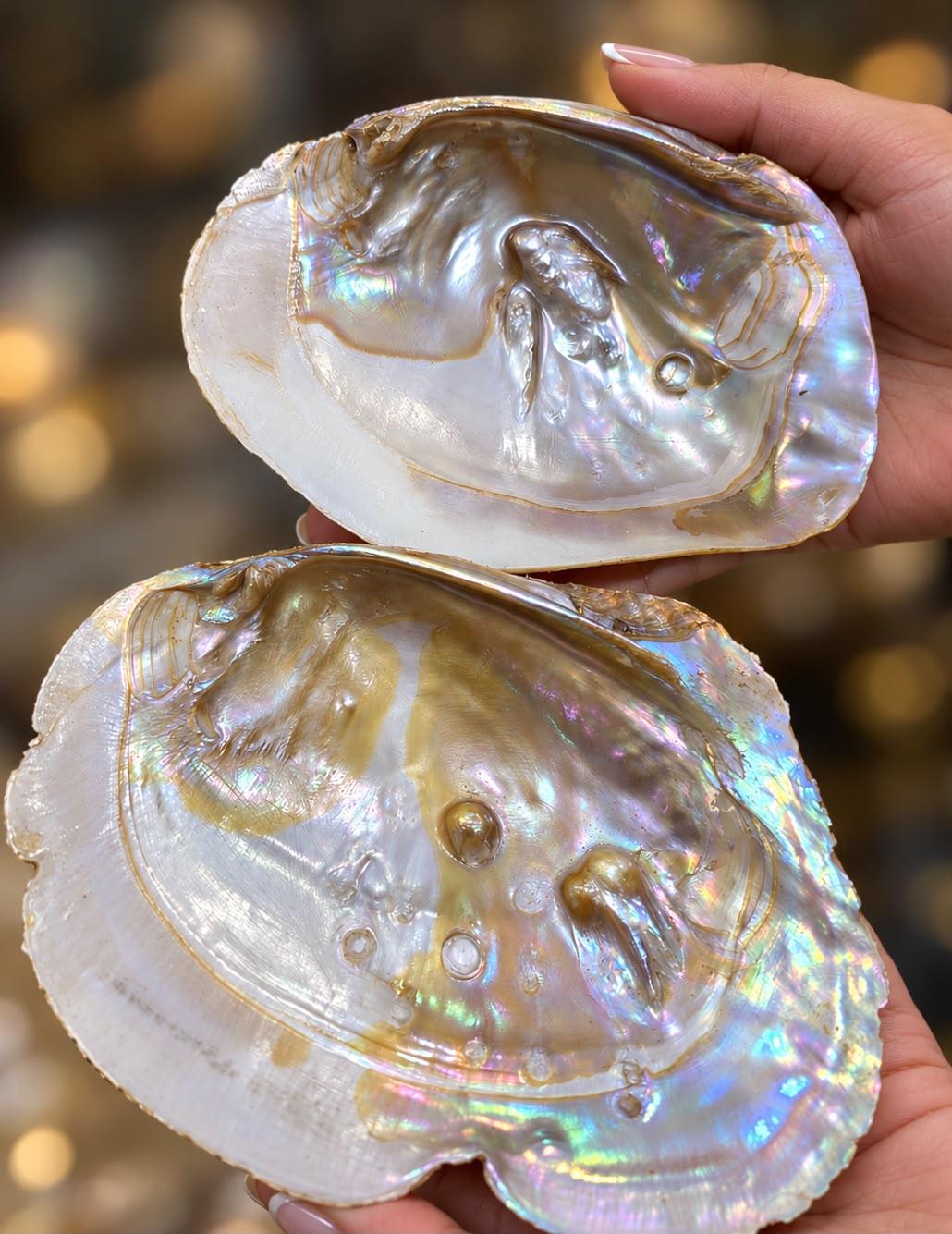
Natural Gulf pearl · Unset
Nacre — the material that gives a pearl its lustre
“The lustre of nacre comes from the interference of light reflected from successive layers of aragonite crystals, each between 400 and 600 nanometres thick. The effect is not a surface phenomenon. It comes from inside.”
Not all nacre is equal. The mineral composition of the water in which the mollusc lives — the temperature, the salinity, the specific trace elements present — all affect the quality and character of the nacre it secretes. The pearls of the Arabian Gulf are formed in warm, shallow water of a specific mineral composition that has not been replicated by any other pearl farming operation in the world. This is not marketing. It is geology.
The pearl associated with the name “Basra” — the great trading port through which Gulf pearls moved for centuries — possesses a warmth of colour and a particular depth of orient that no pearl from Australian, Japanese, or Tahitian waters produces. It is not simply a different pearl. It is, in some fundamental sense, a different material.
These pearls have not been commercially harvested since the 1940s. The discovery of oil in the Gulf ended the diving economy within a decade. What remains is antique — pearls already made, already strung, dispersed across private collections and estate sales and the deep markets of Hyderabad, where knowledge of their provenance is still maintained by families whose grandfathers traded them.
“The Basra pearl surpasses in its water, its orient, and its warmth every other pearl known to the trade. There is a depth to it that no imitation has approached.”
ON QUALITY
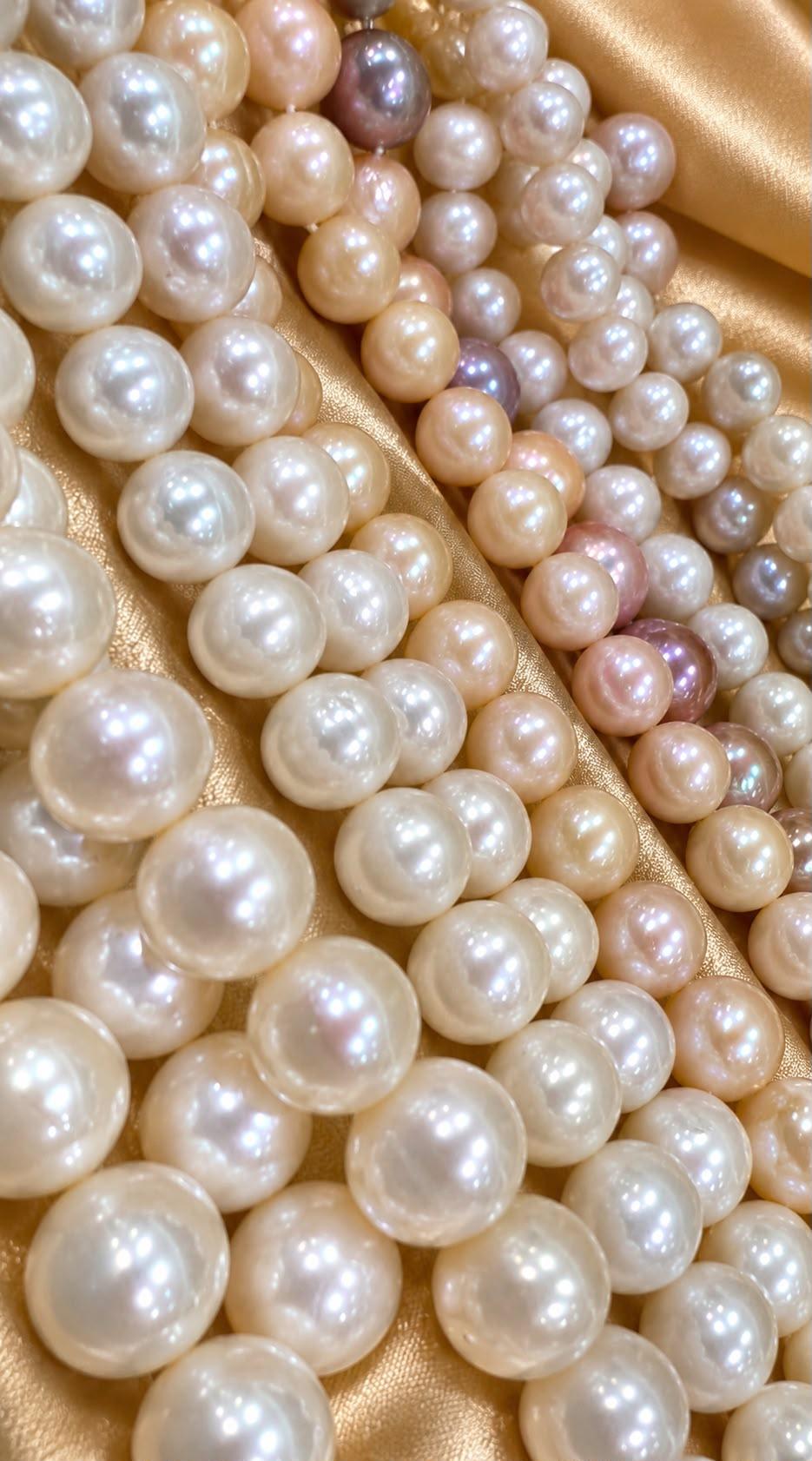
Judging a pearl requires learning to see what is not immediately visible. A pearl's lustre — the reflective quality of its surface — is the first and most important indicator of quality. Hold it at arm's length toward a diffuse light source. If you can see your reflection with some clarity, the lustre is good. If the reflection is sharp and warm, the lustre is exceptional.
Beneath lustre, the orient — the iridescent glow that shifts as the pearl moves — indicates the quality of the nacre layering. Orient is not a surface effect. It is light passing through multiple nacre layers and interfering with itself on the way back out. A pearl with strong orient has thick, well-formed nacre. It will last.
Surface matters less than people expect. Natural pearls almost always have some surface characteristics — a small ridge, a minor dimple, the trace of how they grew. These are not flaws. They are evidence of origin. A completely clean surface on a pearl described as natural is, in fact, a reason for suspicion.
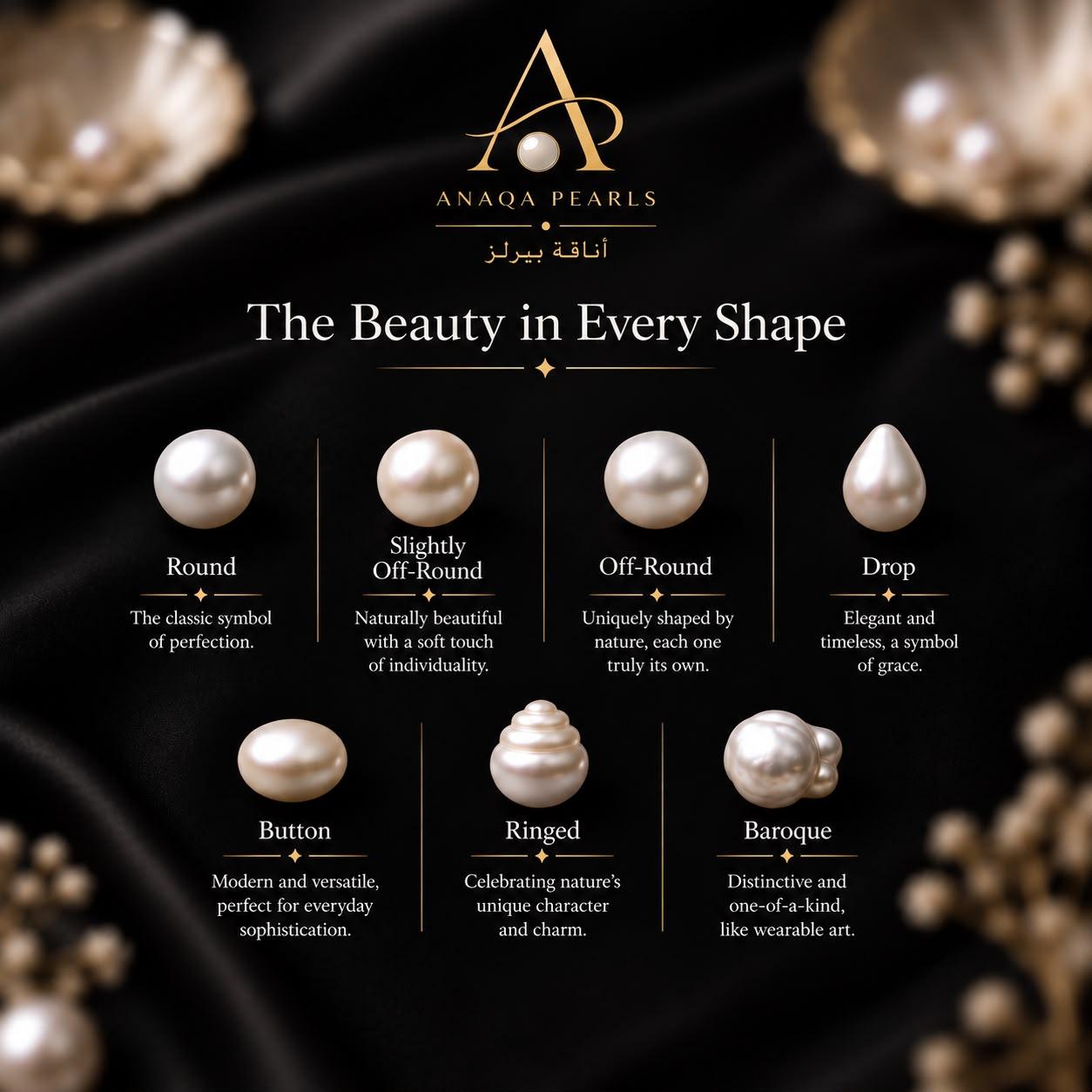
Shape is a matter of preference and purpose. Round pearls command the highest prices in strands and have for centuries. But baroque pearls — organic, irregular, each one different — are often more interesting and occasionally more beautiful than round ones. The finest baroque pieces have a quality that perfect spheres cannot: they look as if they were made by the sea, which they were.
Natural pearl · Surface and orient detail
ON WEARING AND CARE
Pearls improve with wearing. The oils of the skin nourish the nacre and maintain its depth. A pearl worn regularly will outlast and outshine one kept in a box. This is not a selling point. It is the nature of the material.
Put pearls on after perfume and cosmetics, never before. Remove them before swimming. Wipe them gently with a soft, dry cloth after each wearing. Store them separately from other jewellery — nacre scratches easily against metal and gemstones. Store in a breathable pouch, not an airtight container.
Have strands re-strung professionally if they are worn often. The silk thread absorbs moisture over time. An Anaqa strand is strung on natural silk with individual knots between each pearl. We recommend re-stringing every three to five years for a strand worn regularly.
Never use ultrasonic cleaners, steam, or chemical solutions. If a pearl is visibly soiled, a cloth barely dampened with clean water and immediate drying is sufficient. Almost nothing else is required.
Now that you know what you are looking at.
EXPLORE THE COLLECTIONS →